
Ancient skeleton uncovered at DMV - Still waiting to be served.
- (By John Deer)Published: 01/06/2026
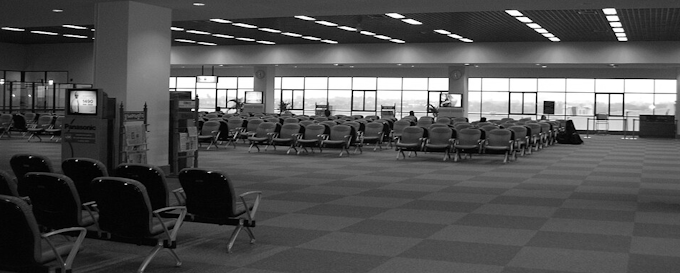
DMV Confirms: Customer Will Not Lose Place in Line.
Still 294 Numbers Away From Being Served.
Rome - A janitor made a startling discovery last week inside a long-forgotten waiting room: a remarkably well-preserved skeleton, seated upright in a plastic chair and still clutching a faded papyrus ticket marked B-CCCXI.
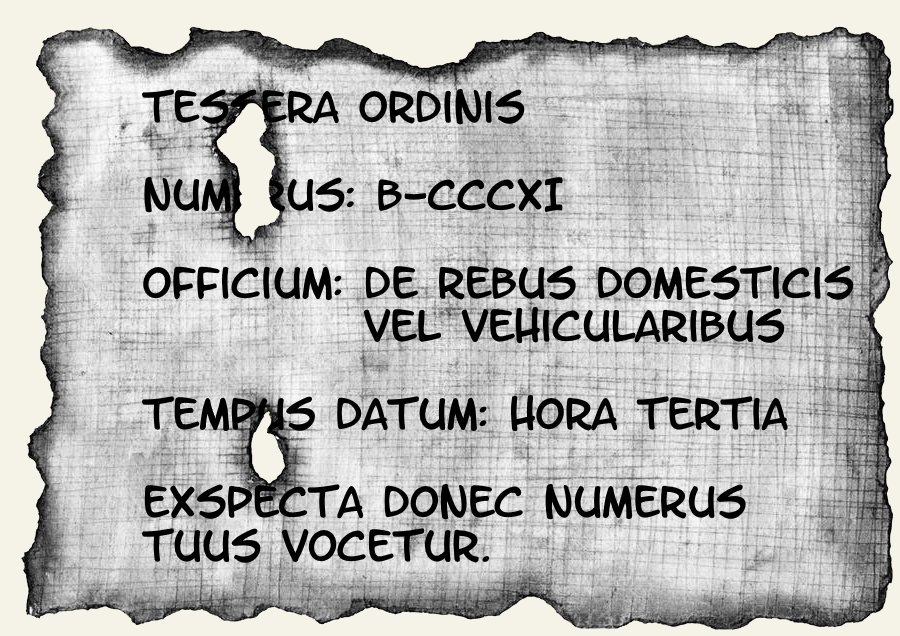 Officials have confirmed the individual dates back to the height of the Roman Empire, sometime around 117 AD, according to records still considered more current than the DMV's system. Despite the passage of nearly two millennia, officials added, the customer "will not lose their place in line."
"The system is functioning normally," said a spokesperson, gesturing toward a flickering display last updated during the reign of Emperor Tiberius. Nearby, a second line labeled "Combustion Engine Registrations" appeared to be moving even more slowly.
Experts believe the man originally arrived to register a chariot or update his address following a minor expansion of the Roman empire.
"His posture suggests early optimism," said a lead archaeologist. "But the gradual slumping of the spine indicates he entered what we classify as the 'eternal waiting phase,' followed shortly by 'acceptance,' and finally 'skeletal compliance.'"
Beside the remains, researchers uncovered wax-coated writing tablets common in ancient Rome, covered in neatly scratched notes that appear to be unfinished complaint forms. None, however, were ever submitted.
Historians say the find challenges the assumption that bureaucratic inefficiency is a modern problem.
"In many ways, this is the most Roman thing imaginable," one expert noted. "An empire capable of building roads across continents, but still unable to move a line forward."
DMV officials emphasized that procedures have improved since antiquity. "We've transitioned to more efficient systems," the spokesperson added. "Including the telegraph, which is expected to significantly reduce wait times by the 19th century."